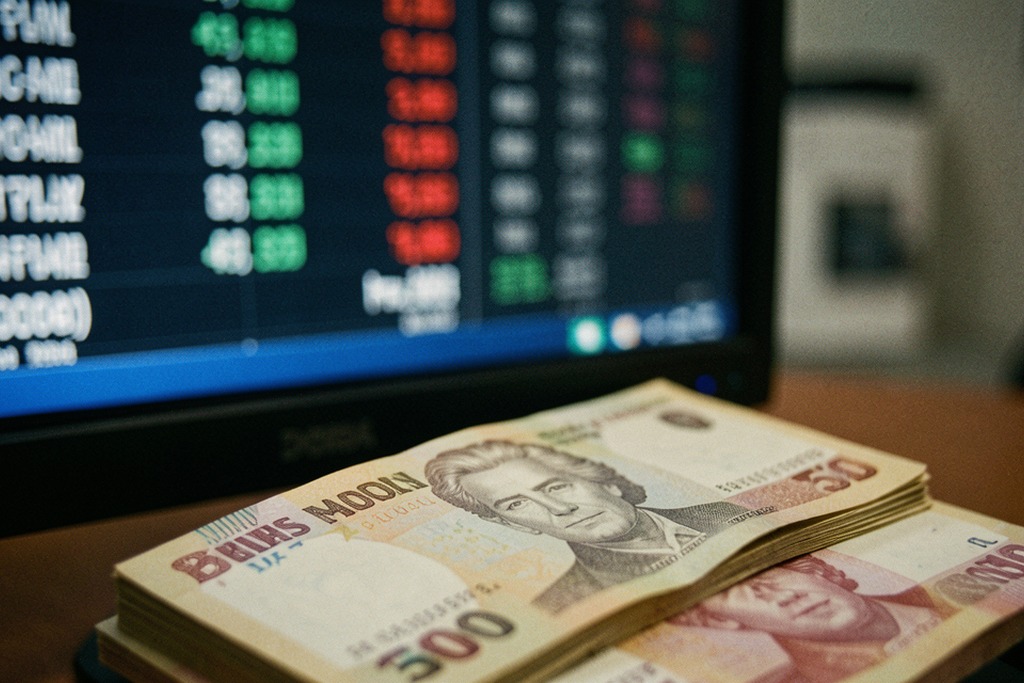
Argentina’s sovereign-risk spread closed above 600 basis points on Friday, September 25, as government bonds weakened and the dollar reached a new nominal high against the peso at Banco Nación. JPMorgan’s country-risk measure finished at 609 basis points, up 31 points, or 5.4%, from Thursday’s 578, according to TN. It briefly touched 628. The move mattered beyond one trading session: it raised the implied price of any return to international bond markets while the government faced a crowded foreign-currency debt calendar.
The Banco Nación retail dollar ended at 1,545 pesos, five pesos higher on the day. The nominal record does not, by itself, measure an inflation-adjusted devaluation. In the equities market, TN reported that the S&P Merval fell 1.6% in pesos and 0.6% in dollars. Argentine shares traded in New York also declined, with Banco Macro among the largest reported fallers.
A costly signal from the bond market
The spread is calculated against US Treasury yields: a rising reading signals that investors demand a larger premium to hold Argentine sovereign debt. Canal 26 reported a tenth consecutive trading day of increases and said the measure began the week around 534 basis points. TN put its increase from the end of August at 97 basis points, or 18.9%, as of September 25. The exact daily levels matter less than the direction: a sustained sell-off complicates attempts to refinance obligations abroad on affordable terms.
TN reported losses of up to 1.1% on dollar bonds trading overseas during the session; Canal 26 described some individual bonds as down as much as 2.2% intraday. Those figures cover different securities or points in the session, not a single uniform decline. A weaker bond price mechanically pushes its yield higher, but the country-risk indicator is not itself the interest rate on a newly issued Argentine bond.
Investors were also weighing external and domestic pressures. Canal 26 cited higher US borrowing costs and Middle East tensions alongside analysts’ concerns about Argentina’s slower reserve purchases, weaker activity and the approach of the 2027 election. Those are interpretations from market participants, not proof that any one factor caused Friday’s price moves. Economist Eric Ritondale of Puente, as reported by Canal 26, placed more weight on the external backdrop, while Fernando Marull y Asociados said only part of the rise was global.
The fiscal and reserve test
Friday’s pricing put the government’s fiscal and monetary strategy under scrutiny. According to Canal 26, consultancy 1816 questioned whether Argentina could return to international debt markets before the 2027 presidential vote under then-current conditions. That was an assessment rather than an announced Treasury timetable. The national government’s commitment to fiscal balance remains a central premise of its financing plans, but a strong fiscal target does not automatically restore external credit access when risk premiums rise.
The currency figures sharpened the same debate. TN quoted broker Gustavo Ber saying traders were focused on the central bank’s pace of dollar purchases and whether faster buying might fortify reserves ahead of 2027. TN also reported the financial-market MEP dollar at 1,551.93 pesos and the contado con liquidación rate at 1,621.90 during Friday’s trade. These are different market mechanisms from the Banco Nación retail quote and should not be treated as interchangeable prices.
Next, traders would watch whether the spread’s climb continued when markets reopened, whether the BCRA could accumulate reserves and whether the Treasury could meet its dollar obligations without unsettling the peso. Friday showed the immediate cost of uncertainty in bonds, equities and currency quotations. It did not establish that a debt-market return was impossible, only that it looked substantially more expensive at that moment.