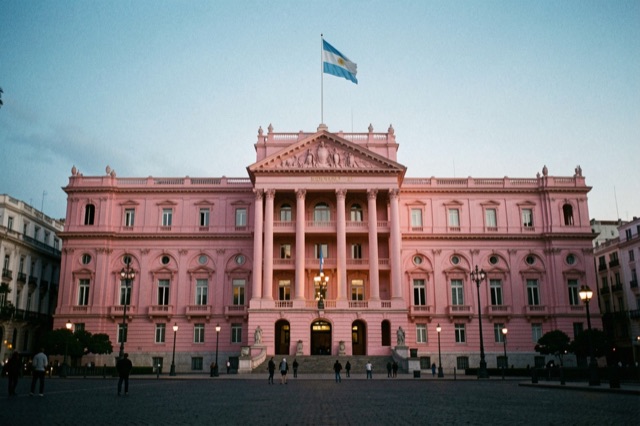
President Javier Milei’s government stepped up talks with provincial leaders on Friday, September 25, linking its 2027 budget negotiations to a proposed overhaul of Argentina’s primary elections. Chief of Cabinet Diego Santilli met San Juan governor Marcelo Orrego at the Casa Rosada; Orrego backed the government’s proposal to eliminate the nationwide PASO primaries, according to Canal 26. Santilli also met Mendoza governor Alfredo Cornejo that afternoon, TN reported.
An endorsement from a governor is not a congressional vote. But provincial governments influence legislators whose support the ruling La Libertad Avanza bloc needs to pass its spending plan and change election rules. The meetings showed how a debate ostensibly about the cost and design of primaries had become bound up with negotiations over next year’s public finances.
Two bills, one set of bargaining partners
TN said the proposed 2027 budget was expected to begin debate in the lower house in early October. Santilli used the meetings to review the government’s parliamentary agenda, including the possibility of suspending or eliminating the open, simultaneous and mandatory primary elections, known as PASO, ahead of the 2027 presidential contest. Canal 26 reported that Orrego supported the elimination proposal after previously questioning the cost of keeping primaries in San Juan.
The government had met Chaco governor Leandro Zdero the day before, September 24. TN reported that Zdero favoured suspending the 2027 presidential primaries. That distinction matters: suspension for one contest and permanent abolition are different legislative outcomes. TN said the PRO party and the Radical Civic Union had opposed eliminating the primaries, prompting the government to examine the narrower suspension option. No agreement covering both options was reported on September 25.
There was another contested part of the proposed election framework. TN reported resistance among dialogue-minded opposition figures to a system of candidate-list alliances or collectoras being discussed with governors; it quoted La Libertad Avanza senator Patricia Bullrich warning that such arrangements could distort the electoral system. For critics, the structure of the election matters as much as its budgetary cost. For the government, removing or pausing PASO could reduce the public cost of running national primaries. TN attributed to the Casa Rosada an estimate of US$250 million for those elections; that figure is a government claim, not an independently audited saving from the proposed reform.
Provincial influence is not a blank cheque
The talks followed a September 24 Senate vote on changes to the cold-zone gas-subsidy scheme, which TN said drew support from legislators associated with several governors. That vote demonstrated a possible route for the government to assemble issue-by-issue coalitions. It did not guarantee the same alliance on the 2027 budget or electoral legislation. Governors may agree with one reform while demanding different terms on fiscal transfers, subsidies or provincial priorities in another.
Canal 26 described Orrego’s meeting as part of a broader round of provincial consultations, not as a signed budget accord. Cornejo’s attendance likewise does not establish his position on every provision of either bill. The ruling coalition must translate executive-level conversations into majorities in both chambers, while its prospective allies may resist parts of the electoral package.
The immediate next test was parliamentary rather than ceremonial. Budget deliberations were due to get under way in October; discussions over the PASO proposal were continuing, according to TN. Friday’s meetings gave Milei a visible ally for scrapping primaries in San Juan’s governor, but left the legislative arithmetic, the fate of the budget and the final form of any electoral reform unresolved.