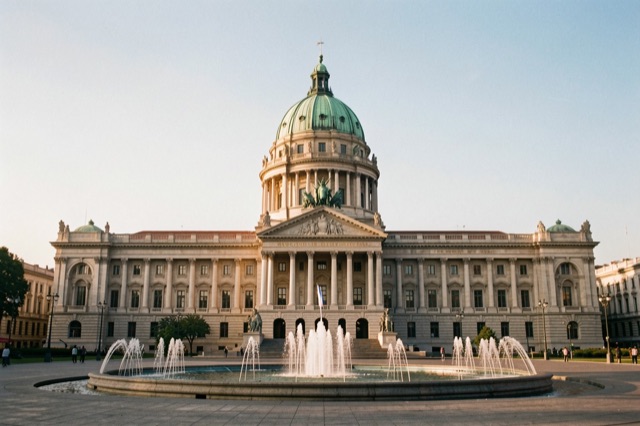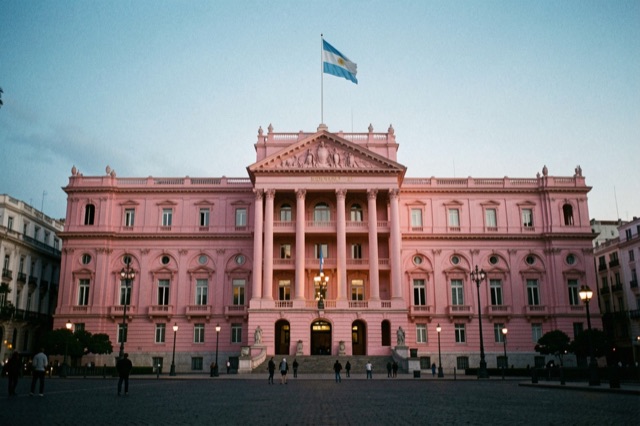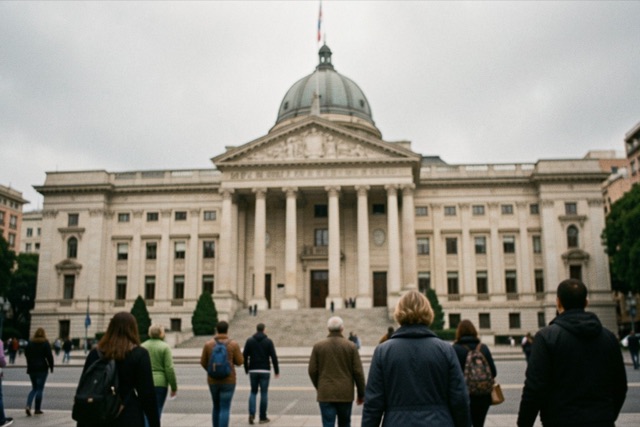
President Javier Milei opened Argentina's 144th ordinary congressional session on March 1 with a speech that claimed a newly favorable position for his reform program. The official transcript placed the recent labor-law vote, changes in criminal policy and trade agreements near the beginning of his account of the government's progress. But the address was also marked by sharp exchanges with opposition members. The difference between winning legislative votes and persuading a divided country formed the backdrop to his third opening of ordinary sessions as president.
An inventory of recent legislation
Milei listed measures passed during the preceding special sessions, including the labor modernization law, a juvenile criminal-law reform and legislation he called the fiscal innocence law. His transcript also described an approved budget as a central achievement. Those references are a record of how the president chose to present his government's progress; claims about the economic benefits of each measure require evidence beyond a political speech. In particular, his argument that the labor law would help workers excluded from the formal market was a forecast about effects not yet observable on March 1.
He tied that domestic program to foreign trade. Milei said Argentina had just promulgated the Mercosur-European Union agreement and had secured a commercial accord with the United States. These were different legal and diplomatic processes. The January signature of the EU-Mercosur deal had not, by itself, completed all the approval steps required in Europe and across the bloc. The bilateral US agreement likewise had its own Argentine legislative path. Presenting the agreements together showed the president's strategic direction; it did not remove the need to examine their implementation separately.
Philosophy and confrontation
The transcript framed the coming period around what Milei termed morality as state policy. He put ethical principles before economic efficiency and short-term political expediency, continuing a theme he had developed publicly at Davos in January. That ordering helps explain his commitment to deregulation and private enterprise: in his account, the state should protect property and freedom rather than direct production. It also made the speech more than a checklist of bills. He was defending a theory of government before the institution that would judge future reforms.
The chamber's divisions were audible in the official record. Milei interrupted his prepared remarks repeatedly to answer opposition interjections, sometimes in openly insulting language. The exchanges demonstrated political friction even after an apparently productive special session. Opponents did not have to agree with his reading of Argentina's past, its labor market or the quality of the new laws simply because the governing coalition had assembled votes. Similarly, a confrontation in the chamber was not a substitute for measuring the practical results of legislation.
The ordinary session's challenge
Opening a new congressional term gave Milei a platform, not an automatic majority for every item on his agenda. Further reforms would still require bills, committee work, negotiations and votes. The government would also have to contend with how provinces, unions and businesses experienced existing changes, particularly the recently approved labor law. His address cast the period as a break with Argentina's previous economic model. The more exacting question for the ordinary session was whether that ideological program could continue to produce workable laws and whether its promised improvements could be demonstrated outside the presidential transcript.