Javier Milei's La Libertad Avanza came first in Buenos Aires City's legislative election on May 18, defeating both the Peronist ticket and PRO, the centre-right party that has dominated the capital's politics for nearly two decades. Presidential spokesman Manuel Adorni led the winning slate. With 98 percent of the vote counted, the Buenos Aires Herald reported 30.1 percent for La Libertad Avanza, 27.3 percent for the Peronist Es Ahora Buenos Aires ticket and 15.9 percent for PRO. A city-level contest had become a sharp test of power on the Argentine right.
The city's ballot renewed half the seats in its 60-member legislature. It was not a mayoral race, a nationwide referendum or a direct vote on the president's congressional majority. Still, its political significance was clear: the president's own movement beat the party governing the capital in a place PRO had long treated as its base. The result offered Milei a claim of momentum before the October national midterms, while giving PRO reason to reconsider whether running against or alongside him served its interests.
Fragmentation and a weakened incumbent
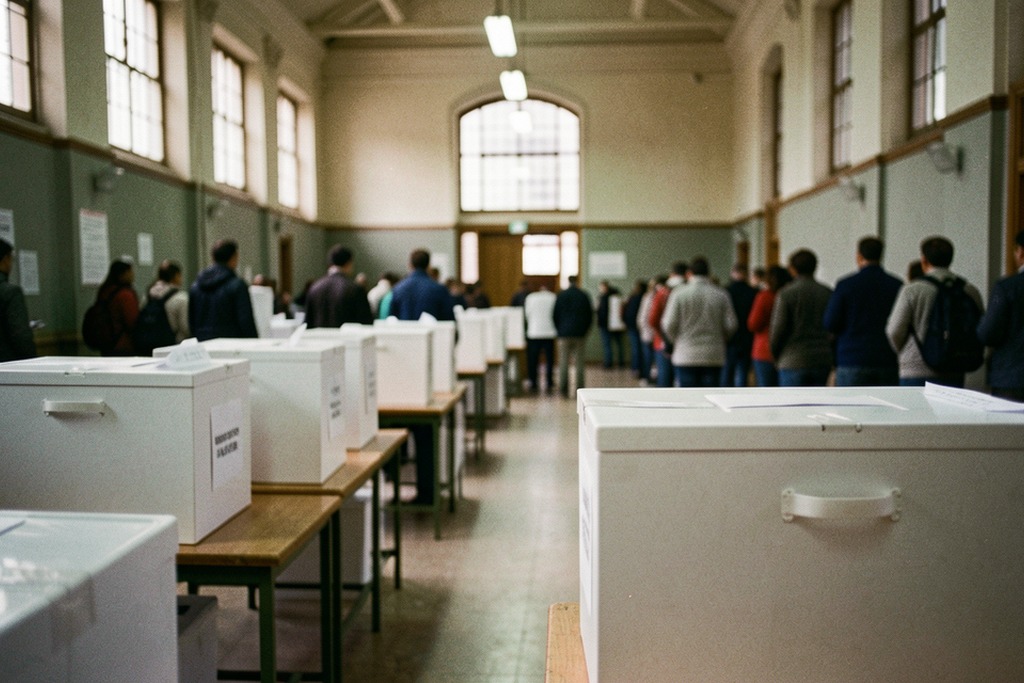
The Herald reported 17 competing tickets and a turnout of 53.2 percent of 2.5 million eligible voters, describing participation as the city's lowest on record. The stand-alone local vote had been separated from the October national election, a factor the report linked to expectations of reduced participation. A low-turnout city election can show which organisation mobilised its supporters most effectively without proving that all voters nationwide have changed their minds.
Adorni's first-place finish put Leandro Santoro's Peronist ticket second. Silvia Lospennato's PRO ticket finished third, and former mayor Horacio Rodríguez Larreta's separate ticket placed fourth with about 8 percent, the Herald reported. Those results exposed several divisions, not just a simple contest between president and opposition. PRO and Milei's party had cooperated on national policies but competed against one another locally. Rodríguez Larreta's campaign created another option for voters once associated with PRO's city leadership.
The libertarians campaigned on bringing elements of the federal government's 'chainsaw' approach to the city, according to the Herald. Voters could support that message, the candidate, a wider national direction or a protest against established local parties. One ballot cannot distinguish those motivations precisely. PRO's loss did nevertheless change bargaining power on the centre-right: an ally whose votes had helped Milei govern had been beaten on its home turf by a relatively young political organisation.
A victory with boundaries
Proportional allocation meant finishing first did not entitle La Libertad Avanza to every seat contested. The fragmented vote also left nearly seven in ten participating voters choosing other tickets. Santoro's second-place showing gave Peronism a substantial bloc of support in a city where it has often struggled against the right. For Milei, the value of the result was political leverage and campaign morale rather than automatic control of either the city administration or Congress.
The administration had begun 2025 with contentious fights over austerity, the $LIBRA token and the exchange-rate regime. The May election showed that those disputes had not prevented its candidate from topping this city ballot. The next question was whether a local victory could be converted into broader electoral organisation without alienating PRO voters Milei might need elsewhere. Both the October midterms and future legislative negotiations would be better tests of national strength than the capital's result alone.