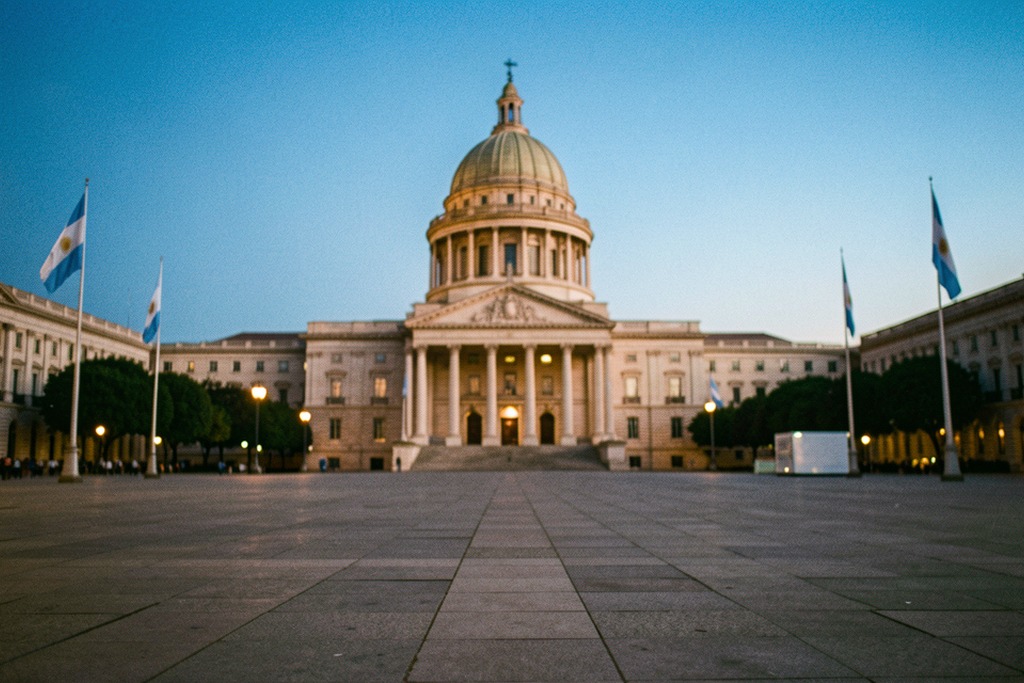
Argentina’s Senate approved the 2026 national budget on December 26, 2025, handing President Javier Milei his first congressionally passed spending plan since taking office. The final vote was 46 to 25 with one abstention, Reuters reported. After two years in which the executive operated by extending the 2023 budget, lawmakers had restored an annual legislative framework to a central part of fiscal policy. The victory was not simply a routine accounting exercise: it set forecasts and priorities for an administration committed to balancing the public books while facing demands to repair underfunded services.
Reuters reported that the law authorized spending of 148 trillion pesos and projected a primary surplus of 1.2% of gross domestic product. It forecast 5% economic growth and 10.1% inflation during 2026. Those were *budget assumptions*, not measured 2026 outcomes. A lower-than-forecast growth rate or higher inflation would change the real purchasing power of spending allocations and complicate the projected surplus. The economy would have to perform close enough to the government’s scenario, or the administration would need to adjust policy.
Why passing a budget mattered
The last national budget passed by Congress had been the one for 2023. In 2024 and 2025 Milei’s administration kept using that older baseline, adjusting allocations as inflation and political demands changed. Critics said this gave the executive considerable discretion while making it harder to scrutinize whether hospitals, universities or provincial programs had enough money in real terms. Supporters of the president argued that spending restraint was essential after years of deficits and runaway inflation. A new budget placed the choices more clearly in a law debated by elected representatives, even if execution would remain an executive responsibility.
The October midterm election changed the arithmetic. Milei’s La Libertad Avanza grew to become the largest lower-house minority and expanded its Senate presence, Reuters reported. It still had to work with other blocs to pass legislation. The budget vote demonstrated that negotiation could produce a majority for a specific bill. It did not establish that all of the president’s proposed labour, tax or mining changes would command the same coalition; each would distribute costs and benefits differently.
The fight over social spending
The approved text did not include a chapter rejected by the lower house that would have repealed disability-emergency and university-financing laws, the Buenos Aires Herald reported. Milei had previously vowed to defend fiscal balance despite that defeat, saying he would reallocate expenditures if necessary. That left a practical question about which line items would absorb the pressure. Earlier in the year Congress had overridden presidential vetoes on funding for disability, pediatric healthcare and public universities, Reuters reported. A budget’s nominal promise could not by itself settle disputes over how much each service would receive after inflation.
The Civil Association for Equality and Justice, a Buenos Aires-based organization cited by Reuters, calculated that the new plan involved a 7% real increase compared with 2025 but remained 24.6% below the real level of the 2023 congressionally approved budget. Its comparison depended in part on the inflation assumptions used. It also argued that increases for social services did not fully restore prior reductions. The government would emphasize the overall fiscal target; rights groups and service providers would judge whether allocations bought actual medicines, classes and care. These were competing assessments of what the same spending law would achieve.
For Milei, the budget was a legislative milestone at the end of a turbulent year of electoral reversal, peso pressure and recovery in the national midterms. The next test lay in implementing its provisions under changing prices, handling the social-spending mandates Congress had defended and assembling separate majorities for further reforms. A budget fixed the rules for 2026 on paper; the country’s economy and institutions would determine how well those rules held.