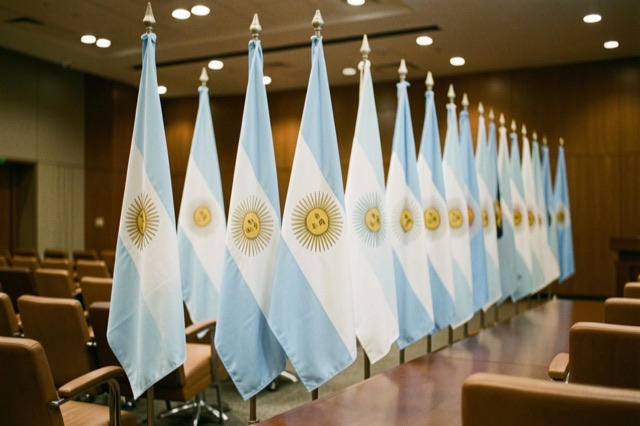
President Javier Milei said in a televised address on September 3 that Argentina would move against companies developing oil resources near the Falkland Islands, escalating a dispute with Britain over the South Atlantic territory that Argentines call the Malvinas. He promised legislation to strengthen penalties for unauthorized activity. Britain responded that the islanders' wishes determine the territory's status; the oil-project partners maintained that they held valid licences. The exchange was a shift in the tone of Milei's sovereignty campaign, not a change in who administered the islands.
Oil adds urgency to an old dispute
The immediate focus was Sea Lion, an oilfield north of the islands operated by Navitas Petroleum with Rockhopper Exploration among its shareholders, Reuters reported. Argentina regards development without its consent as unlawful; the partners said they had valid licences and did not expect the latest moves to materially affect their project's schedule. A drilling or development decision there would therefore intersect two incompatible claims of authority. Reuters reported that Milei intended to extend sanctions to suppliers and broaden the legal response to other activities involving resources Argentina claims. The government still had to put the bill before Congress and secure support.
The dispute predates Milei. Britain has controlled the islands since 1833; Argentina claims sovereignty and invaded in 1982, before British forces retook them. British foreign minister Ed Miliband said London's position was unwavering and that the islanders' right to self-determination was paramount, according to Reuters. That account contrasts with Argentina's call for bilateral sovereignty negotiations. Neither side treated the other's legal argument as settled by a speech in Buenos Aires.
Washington's signal, London's answer
Milei's tougher language followed remarks by US President Donald Trump that Washington was reviewing its neutral position on the territorial dispute, Reuters reported. A review was not an endorsement of Argentina's claim. Milei nonetheless suggested the diplomatic weather might favor Buenos Aires. This was a striking test of his close relationship with Washington: the United States also has longstanding ties with Britain, and a presidential comment alone could not resolve the dispute.
London's immediate reply was direct. Miliband said the islands were British and would remain so because that was the overwhelming position of islanders. British defence minister Wes Streeting characterized Milei's remarks as domestic Argentine politics. Those statements made clear that Argentina's heightened pressure faced explicit British opposition, not a vacuum in which declarations could substitute for negotiation. The investors' assertion about licences added a commercial opponent to the political one.
The policy stakes extended beyond rhetoric. A wider Argentine sanctions framework could affect contractors and suppliers with interests elsewhere in the country; at the same time, its reach over activities on territory administered by Britain was uncertain. A defense-spending push in the name of sovereignty would have to be reconciled with Milei's fiscal-restraint agenda. Both developments merited scrutiny rather than the assumption that one address had already altered the balance of control.
The immediate next steps were the draft law, any concrete enforcement action and the response of the Sea Lion developers. For Argentina, the September address elevated oil and diplomatic leverage within a dispute that had resisted settlement for decades. For Britain and the islanders, the stated answer remained self-determination and continued British administration.