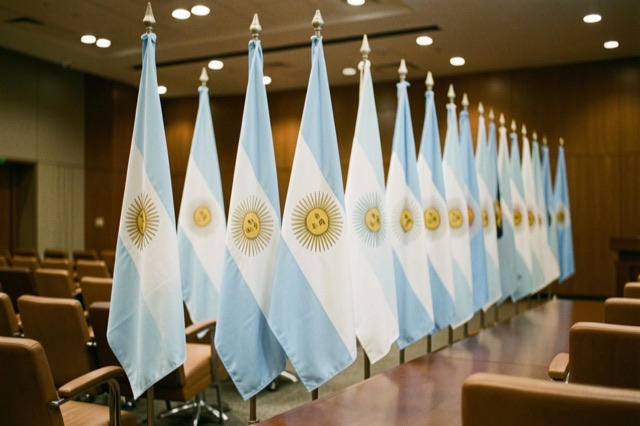
President Javier Milei used his address to the UN General Assembly in New York on September 23 to argue that the organization had neglected Argentina's longstanding claim to the Falkland Islands. He challenged British-backed plans to develop oil around the territory, known in Argentina as the Malvinas, and portrayed the question as a national cause. The speech put sovereignty near the centre of his foreign-policy message. It did not mean the UN had adopted Argentina's position, nor that Britain had agreed to negotiations over control.
A dispute brought back to the podium
Al Jazeera's account of the address identified Sea Lion, an oil project some 220 kilometers north of the islands, as the immediate flashpoint. Navitas Petroleum and Rockhopper Exploration were developing the field, with production planned for 2028. Argentina considered activity in waters it claims without its authorization illegal. Milei referred to a 1976 UN General Assembly resolution on negotiation and unilateral actions and said his administration would defend its claim through peaceful and practical means. Reporting the Argentine argument requires distinguishing it from a legal resolution of the ownership dispute: Britain and the islanders reject Argentina's claim.
The administration had already begun sanctions proceedings against people and companies associated with offshore development, according to Al Jazeera. A national speech in early September had raised the prospect of wider penalties, and the UN appearance carried that domestic policy argument to an international audience. The appeal to multilateral principles sat alongside Milei's criticism of the UN as an institution: he argued it had failed to protect international security and rights. That combination was politically pointed, but it left the territorial disagreement unchanged on the ground.
The islanders' position
Britain has administered the islands since 1833, while Argentina's claim has remained a core theme of its diplomacy. The two states fought a war in 1982 after Argentina invaded; British forces regained control. London argues that islanders should choose their future. Al Jazeera reported that, in a 2013 referendum, 1,513 of 1,517 voters chose to remain a British overseas territory. Milei rejected the application of self-determination to the current population in his speech. This is the dispute's durable divide: a British argument based on the inhabitants' choice and an Argentine demand for sovereignty talks.
Milei's opponents alleged that a sharper sovereignty campaign could serve his expected 2027 re-election bid. Al Jazeera quoted opposition lawmaker Guillermo Michel questioning whether the emphasis was intended to improve Milei's domestic image. That criticism was an interpretation, not evidence that the oil dispute was fictitious. Oil development and the competing territorial claims were real; the political value of highlighting them was a separate matter. Al Jazeera also reported that US President Donald Trump had raised the possibility of reviewing Washington's position without endorsing Argentina's claim.
The speech underscored Milei's ties with the United States and Israel as well as his criticism of the UN. But the concrete next steps lay in Argentina's legal and sanctions measures, Sea Lion's development timetable and the responses of London and the islanders. The UN stage could amplify Argentina's case; it could not by itself confer sovereignty or halt a British-licensed project. Those limits made the diplomatic spectacle consequential without confusing it with a negotiated settlement.